26th June 2026
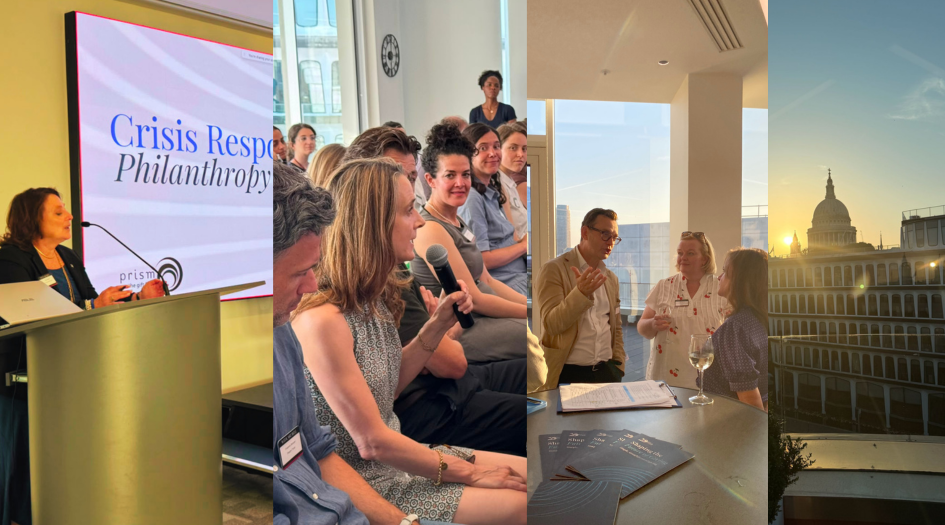
London Climate Action Week and record-breaking temperatures were the backdrop for Prism’s latest event where we asked a panel of leading experts: how do we respond to crisis effectively while investing in long-term solutions that protect people and the planet?
The world we are working in
We are now in a state of permanent ‘polycrisis,’ with multiple crises, cost of living, climate emergency, war and political upheaval and natural disasters happening simultaneously around the world.
The picture painted by our panellists was, by any measure, a sobering one. Geraldine O’Callaghan, director of the UN World Food Programme global office (UK), described overlapping conflicts, such as those in Sudan and the Middle East, where humanitarian need is reaching new heights at a time when government aid budgets across Europe and the US are being cut. Funding from government has become increasingly short-term and restrictive, with grants only running for five or six month cycles compared with historical funding of up to five year commitments. at a time. This is making it difficult for organisations to think long-term and build resilience in areas most at risk.
Jonathan Brinsden, charities & philanthropy partner at Wedlake Bell, added another dimension: the erosion of public trust in institutions, the fracturing effects of culture wars, and a collapse in young people’s wellbeing around the world suggests deeper systemic stress.
The case for preparedness
Chris Davies, director of UK resilience at the British Red Cross, told the audience that every £1 invested in resilience and prevention saves an estimated £35 that would otherwise be spent on emergency response. The return on investment for taking action sooner, putting in early warning systems and community resilience building would make a huge difference so does bringing together as many voices as possible.
Fiona Gaffney, deputy director for societal resilience at the COBR Directorate at the Cabinet Office underlined the gap in public preparedness. Around 30% of UK households feel prepared for emergencies and disasters that could affect their local area. Fiona argued that whole-society resilience starts at home. She then described how the government has shared advice on simple, effective steps the public can take to be more prepared. The government is also working closely with local organisations, communities and faith groups to improve awareness and reduce this gap.
Where philanthropy comes in
Many big aid agencies currently spend around 80% of their budget on emergency response and 20% on resilience building. Geraldine, from the World Food Programme was clear that she would love to see that ratio adjusted. Private philanthropy has an important role to play here which unlike government funding, can be flexible and fast with an ability to also focus on the long term.
For Prism’s donors, who have responded to crises from Ukraine to Venezuela, this raises a real question about where to direct giving. The panel’s answer was consistent: philanthropists need to invest in long-term solutions, from conflict prevention to community resilience and research.
Donor Advised Funds and Collective Funds have a particular role here. They allow donors to give across borders, sustain relationships with trusted organisations, and get funds to where they are needed quickly and with confidence. One question from the audience described banks as the new shadow regulator in overseas grant making, unwilling to fund projects in high-risk areas, which are often places of conflict or prone to natural disasters.
In her introduction, Anna Josse, co-founder and CEO of Prism the Gift Fund, explained how overseas grant-making requires significant oversight and due diligence, particularly in countries identified as complex or high-risk. Against a backdrop of increasing cross border mobility of donors and charities with growing global reach, Anna highlighted the need for creative thinking and strong partnerships. One example is Prism’s new membership of the Myriad Alliance, a global network spanning 10 countries. This unique giving structure is designed to make cross-border giving easier, compliant and more sustainable.
What we took away
The most effective philanthropy is built on partnerships, trust and sustainable infrastructure established before crisis hits. The need for urgent funding campaigns in response to crisis will continue and grow, unless we act. What we need now is vital strategic, long-term resilience building, designed to address challenges and harness the opportunities in the new world we live in.