5th June 2024
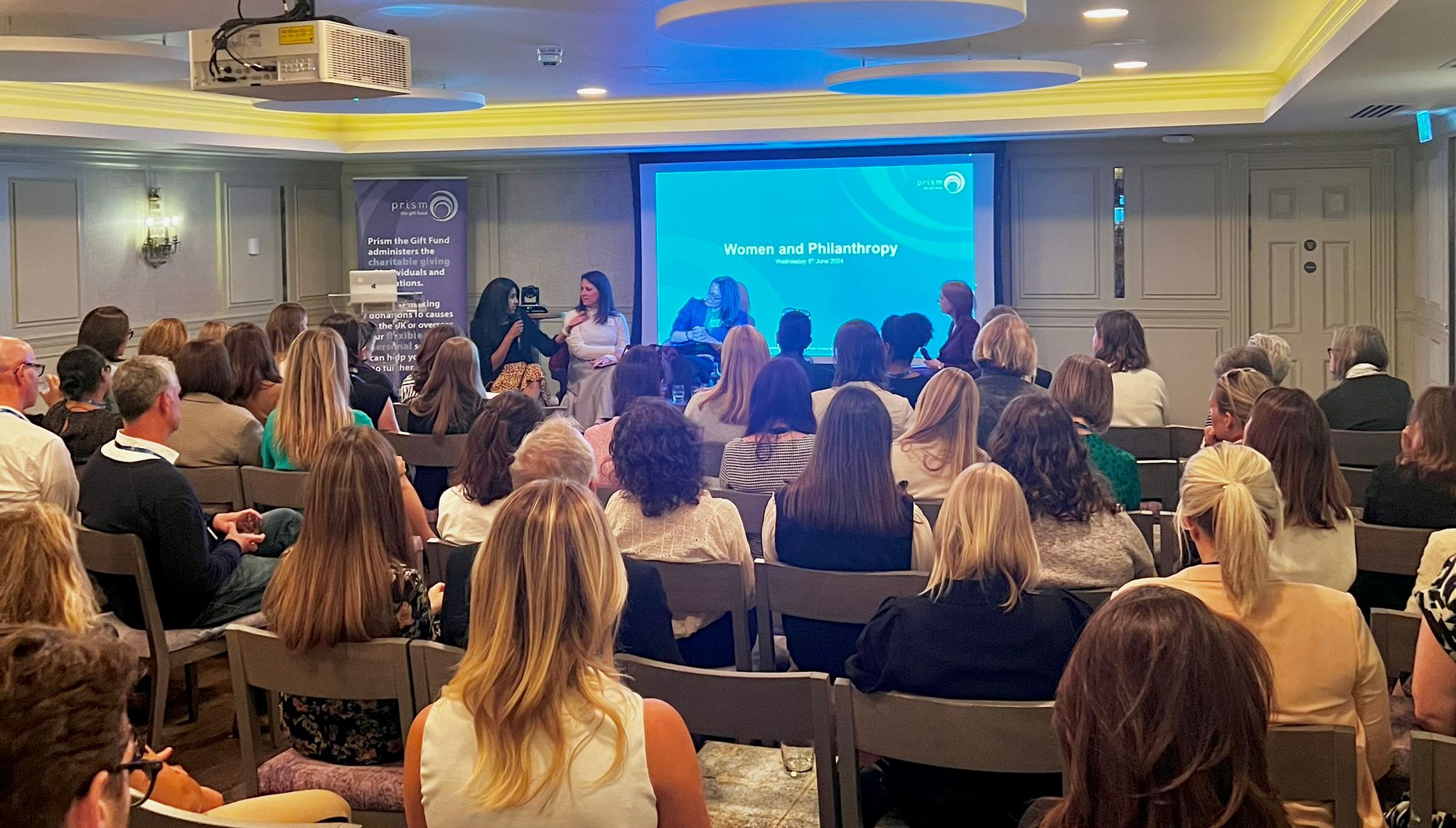
On Wednesday 5 June 2024 Prism the Gift Fund (Prism) hosted its latest panel event looking at the topic of women and philanthropy. The evening was spent exploring the many roles of women philanthropists, how women give around the world, and why the fight for women’s rights is seeing significant progress as women become more financially empowered to give. The discussion was engagingly chaired by Julie Hutchison, a Philanthropy Specialist at LGT Wealth Management – but conversations continued long after as clients, intermediaries, and charities created a space filled with dynamic and important insights into the sector.
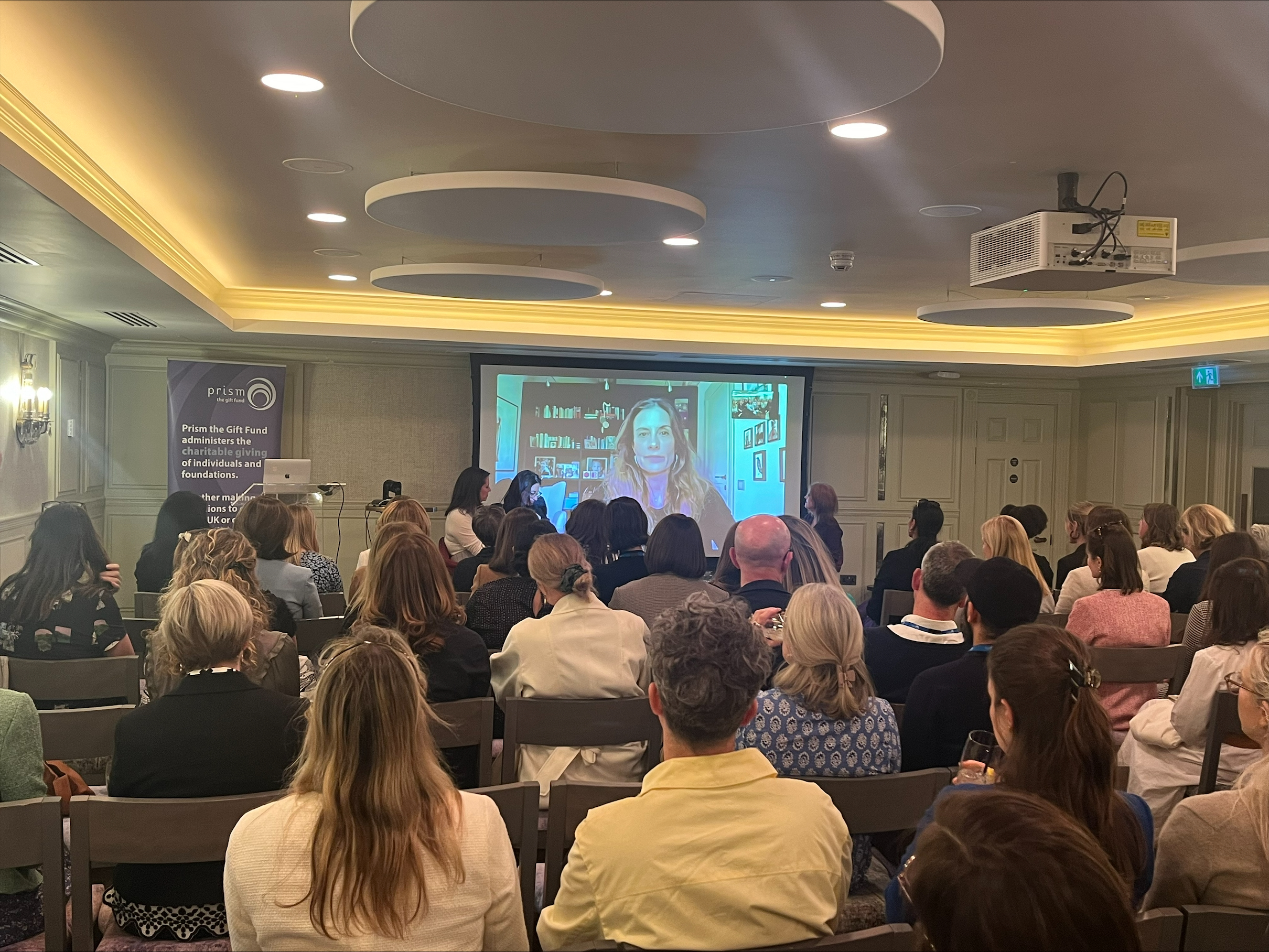
For our first speaker on the panel, we were delighted to welcome Livia Firth, trustee of The Circle NGO and Co-Founder of Eco-Age. The Circle is an organisation that for nearly two decades has created a global network of women and allies to defend equal rights and opportunities for women and girls. Eco-Age is a business consultancy which helps organisations make meaningful change in their ventures through advocacy and strategy development; from committing to climate action to defeating modern slavery and exploitation in fast fashion. Livia gave an inspiring talk outlining the work she is doing to support women’s rights around the world through both legislative change and community-based action.
Livia opened with a poignant question on whether standing in solidarity with women should be viewed as a charitable goal? Yet, systemic change in support of women’s rights is being predominantly led by the charity sector who are driving change and in need of solidarity and support to continue. To visualise the kind of solidarity needed, Livia explained that anywhere you go in the world, women can be observed sitting in a circle talking about their problems and issues, making the whole community an active participant in an individual’s life. The same principle stands in advocacy and philanthropy, a community and network must be fostered for global change to succeed. Therefore, although solidarity should not be viewed as ‘charity’, it is vital for building the global community to drive systemic change. So far, The Circle has reached more than 1.4 million people globally in its initiatives to protect and defend the rights of women and girls.
Continuing along the panel’s theme of women helping other women, Erica Wax and Ana Morales focused on the giving of women and the power of network. Erica Wax is a philanthropist and Co-Founder of Impact100 London, a collective fund at Prism. Impact100 London utilises the model of collective philanthropy to pool philanthropic gifts to achieve a higher impact in its mission to support organisations committed to improving the lives of marginalised women and girls in London. Ana Morales is a philanthropist and Co-Founder of The Beam Network, an organisation dedicated to empowering women wealth holders by providing financial education and enabling investments that are in line with a person’s values. Ana highlighted that often there is an inconsistency in a philanthropist’s financial and charitable investments, financially investing in enterprises that are ‘bad’ whilst philanthropically engaging with a cause that aims to do ‘good’ in the world. Women are more likely to be super-givers so it is crucial they are financially empowered to invest (as men always have been) but to invest in initiatives which have a positive global impact. In doing so, their philanthropic journey begins too.
Julie Hutchison asked what a week in philanthropy looks like for Erica and Ana, to which they responded with a full schedule of meetings to discuss women in finance, working full-time on their organisations, strategic planning, meeting charities, and preparing grants. This only bolsters a point made later that philanthropy is not just about the cheques written but it is a commitment to the cause and sector. Charities need more than just funds, they need knowledge, expertise, and a network to survive. Ana emphasised that an organisation is only as powerful as its connections and what they can bring to the cause. Erica highlighted that giving must also be needs driven. Not the needs of the philanthropist or donating company/foundation, the needs of the charity.
However, for women philanthropists to make these commitments they also need to be empowered. It remains isolating for women to discuss wealth, it is still not the norm, and therefore women do not feel as supported in their investing. Yet, women are found to invest more when they do so in a group or as a community. This is why organisations such as The Circle, Impact 100 London, and The Beam Network are vital for women’s empowerment by facilitating a supportive network of women donors and investors as well as creating worldwide impact to improve the lives of marginalised women and girls. As we reflect on the power of collective philanthropy and community-driven change, we must ask: In a world where the strength of solidarity can redefine futures, how can we make our impact felt?
This led the evening onto its final point, the importance of community power for creating long lasting and meaningful change. What has become evident over the past few years is the world’s need for connection, shown by the Covid-19 Pandemic. If women are more likely to invest as a community then this community must be nurtured as the space where real change will happen. We were then joined by Raakhi Shah, Chief-Executive of The Circle, who illustrated how place-based local giving remains extremely powerful because of its directly observable impact. Moreover, it creates a culture of community action that will transcend generations. It is imperative that long-term advocacy supplements the grant-giving of organisations. Women’s philanthropy is not just about financial engagement but also becoming a change-maker through knowledge and support within a global network. Therefore, whether you are gifting time, expertise, or funds, investing in local and grassroots initiatives gives power back to the community. Raakhi closed with a sincere statement on the diversity of ways we can give and make an impact: “whatever your means, make it meaningful.”